A gearbox design can fail when high ratio and compact space come into conflict. Standard gears force a trade-off. A worm gear set breaks this limit by offering a large reduction and a right-angle layout in a single stage.
Use worm gears when a single-stage high reduction ratio, self-locking ability, or a right-angle drive in a tight envelope is needed. Common applications include lifts, packaging machines, conveyors, and construction machinery.
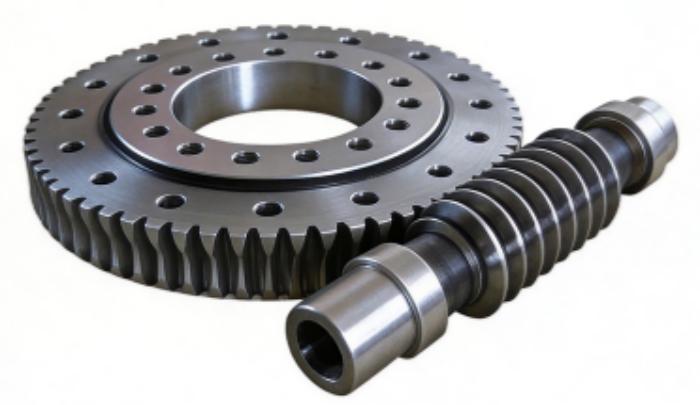
Many machine builders limit worm gears to lifting work. This narrow view misses big chances in indexing tables, steering systems, and high-speed packaging lines. Knowing the full range stops over-design with complex gear trains.
Worm gears serve lifting equipment, conveyor drives, packaging machines, automotive steering, theatre stages, and heavy-duty winches. Their sliding mesh offers self-locking that holds loads without extra brakes.
Worm gear sets convert speed and torque in confined spaces. The worm sits on a high-speed shaft,while the wheel is mounted on a low-speed shaft at a right angle. This natural layout eliminates the need for additional bevel gear stages. The table below maps typical applications.
| Industry | Application | Key Gear Requirement |
|---|---|---|
| Packaging | Carton fold drives, label feeders | High single-stage ratio,smooth indexing,intermittent duty |
| Material handling | Conveyor belts, bucket elevators | Self-locking for load holding, moderate speeds(<600rpm) |
| Automotive | Steering mechanisms, winches | Low backlash,high durability under shock load |
| Construction | Crane hoists, concrete mixers | High torque capacity,self-locking,heavy-duty intermittent operation |
| Entertainment | Stage lifts, turntables | Quiet operation, self-locking for safety,low-speed holding |
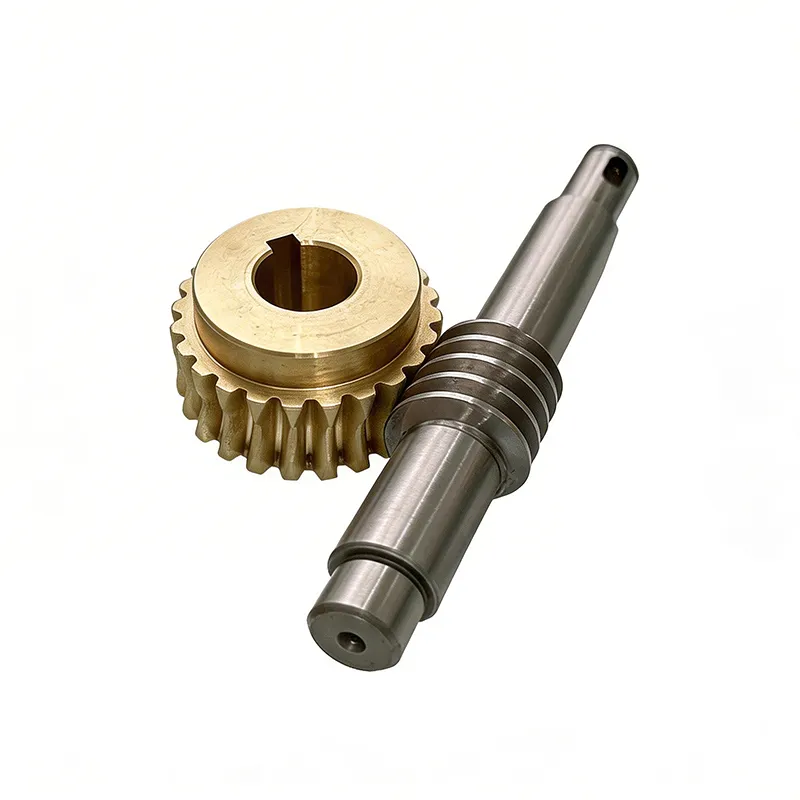
The self-locking feature gets the most attention. When the worm lead angle stays below the friction angle, the gear set cannot be driven backwards. This locks the load in place. Many lifts and hoists rely on this. But self-locking also brings sliding friction. Material pair and lubrication make the difference between reliable hold and early seizure. We produce case hardening worm shafts and centrifugally cast bronze worm wheels. This material pair keeps friction stable under load.
A designer faces a hard choice when a single-stage ratio above 20:1 is needed. Standard helical or spur designs force multiple stages. Worm gears jump this hurdle. But they have limits in high-speed continuous duty.
Choose worm gears for ratios from 10:1 to 300:1, right-angle layouts, self-braking needs, and intermittent or low-speed continuous operation. Skip worm gears for high-horsepower continuous duty above 1800 rpm because efficiency drops.
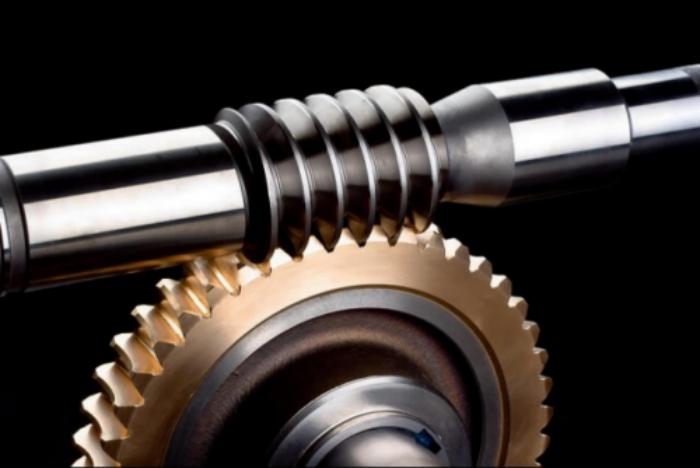
Efficiency separates worm gears from other types. A single-start worm may deliver only 40-70% efficiency under high load. A helical in-line reducer routinely hits above 95%. Heat builds fast in worm boxes. For continuous high-power drives, helical or bevel gears win on efficiency. But for holding, safety, and space, worm gears shine. The table below provides a clear side-by-side comparison.
| Factor | Worm Gear | Helical Gear | Bevel Gear |
|---|---|---|---|
| Single-stage ratio | Up to 300:1 | Up to 10:1 | Up to 6:1 |
| Right angle | Yes (natural) | No (needs extra stage) | Yes |
| Self-locking | Possible | No | No |
| Efficiency | 40-90% (varies with ratio) | 95-99% | 93-98% |
| Backlash | Very low achievable | Low | Moderate to low |
Ratio and layout drive the selection. A packaging machine with a start-stop cycle wants high inertia holding. A worm gear set with a bronze wheel gives this at a lower cost than a servo brake system. A continuously running pump at 30 kW, however, wants the high efficiency of helical gearing. Heat from a worm stage would require a cooling system, tipping the cost balance. Our worm gear sets use case-hardened steel worms and bronze wheels optimized for wear life. The worm thread profile and wheel material are matched to the customer's duty cycle.
Worm gears sit hidden inside many familiar machines. People see the machine run but never see the gear. Missing this can push designers toward more complex and expensive solutions.
Worm gears are found inside packaging machine drives, elevator traction machines, mine hoist gearboxes, construction winches, and heavy-duty valve actuators. The combination of a hard steel worm and a soft bronze wheel handles shock loads well.
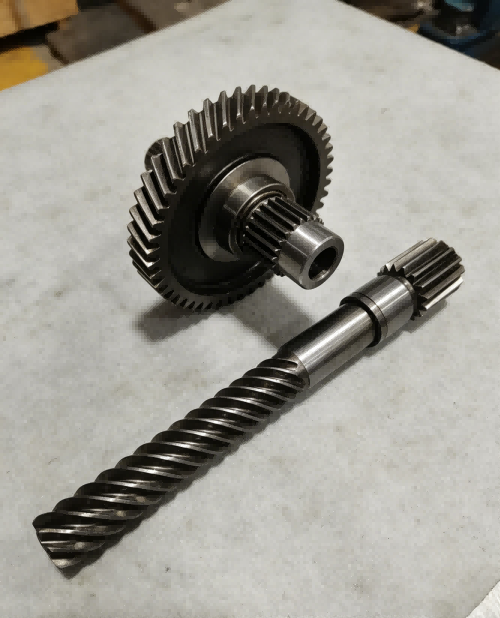
Worm gears fit where space demands a right-angle turn. Elevator machines use large worm gear sets to drive the traction sheave. The self-locking adds safety. In packaging halls, carton folding and glue applicators use fractional horsepower worm reducers for timing. Mining conveyors use robust worm boxes to drive head pulleys under high load. The table below shows typical environments and materials.
| Location | Machine Type | Worm Gear Material Pair |
|---|---|---|
| High-bay warehouse | Vertical lift conveyor | Case-hardened worm + bronze wheel |
| Food packaging | Flow wrapper, cartoner | Stainless or nickel-plated worm, bronze wheel |
| Mining | Belt conveyor drive | Large nodular iron wheel, hardened worm |
| Construction site | Tower crane hoist | Steel worm, centrifugally cast bronze wheel |
Our worm gear and worm wheel range covers these exact needs. We deliver case hardening worm gear sets for gearboxes, high-quality worm gears and worm wheels for packing machines, and brass wheel steel shaft sets for general worm gearboxes. The worm thread grinding we use ensures consistent contact patterns. The bronze wheel hobbing and finishing guarantee low backlash and smooth running. From small packaging drives to heavy-duty crane winches, one production source gives the engineer control over quality and lead time.
Worm gears solve high-ratio, right-angle, and holding challenges in a single compact stage. Match duty cycle and material quality to gain reliable, long-lasting performance.
 English