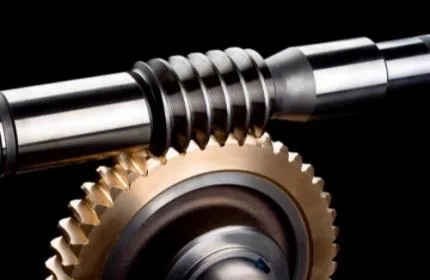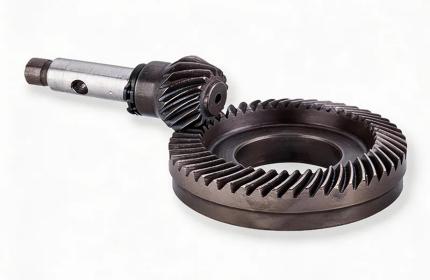
When comparing spiral bevel gear vs straight bevel gear, the best choice depends on application requirements such as speed, noise control, load capacity, precision, and operating environment. In most high-speed and precision transmission systems, spiral bevel gears are preferred because their curved tooth design provides smoother engagement, lower vibration, and higher load performance. A straight bevel gear remains an effective solution for simpler, lower-speed applications where cost efficiency and easy maintenance are priorities.
Understanding the differences between straight and spiral bevel gear designs helps engineers select the right gear solution for industrial machinery, automation systems, robotics, aerospace equipment, and power transmission applications.
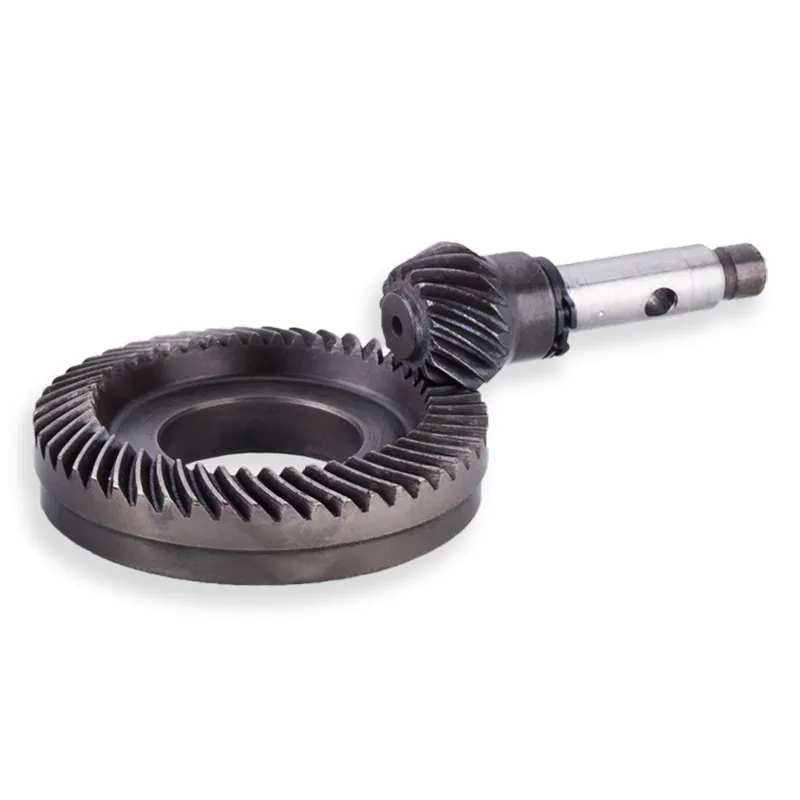
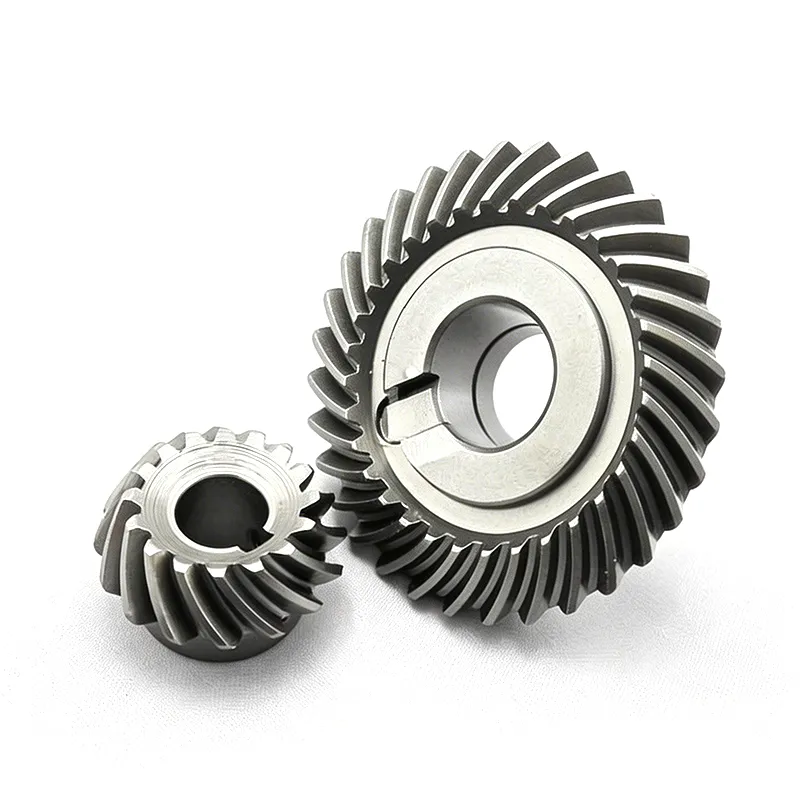
A spiral bevel gear is a type of bevel gear that uses curved teeth arranged along a conical gear surface to transmit motion between intersecting shafts, typically at a 90-degree angle. Unlike straight teeth, spiral teeth gradually engage and disengage during rotation, creating smoother power transmission.
The advanced tooth geometry of a spiral bevel gear improves:
Contact ratio between mating gears
Load distribution across teeth
Operating speed capability
Noise and vibration performance
Overall transmission efficiency
A professional spiral bevel gear manufacturer uses precision machining methods, including CNC gear cutting, heat treatment, and grinding processes, to achieve accurate tooth profiles and optimized contact patterns.
The spiral bevel gear design can be customized according to torque requirements, rotational speed, installation conditions, and performance expectations. This makes spiral bevel gears suitable for demanding applications requiring reliability and precision.
Common applications include:
Industrial gearboxes
Robotics systems
Aerospace transmission systems
CNC machinery
Automotive drivetrains
Marine equipment
Automated production lines
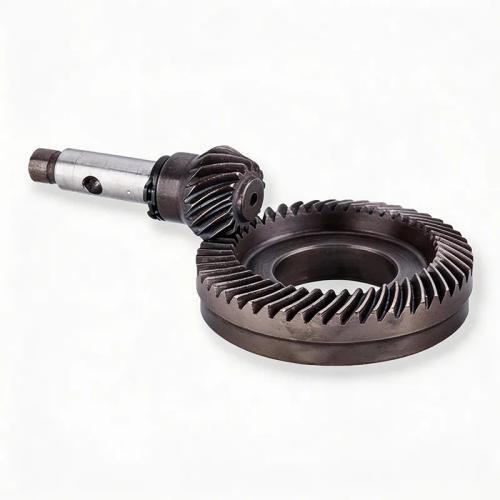
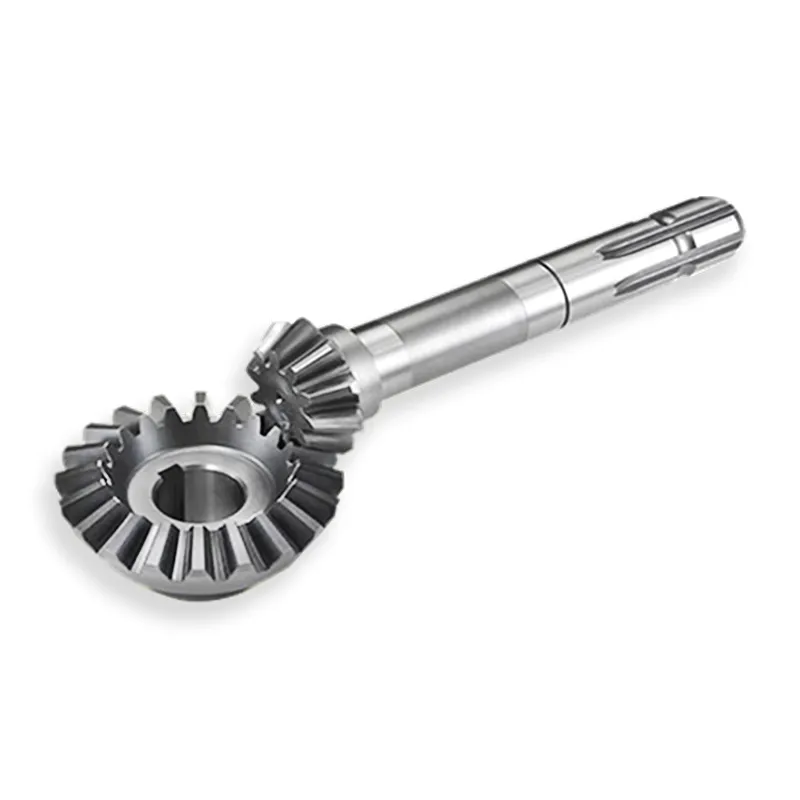
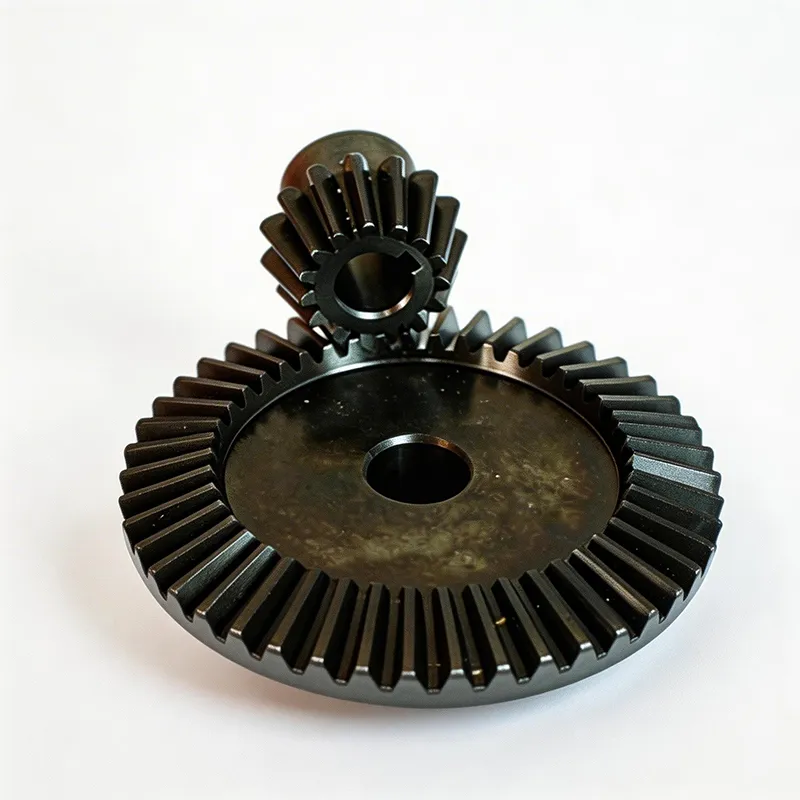
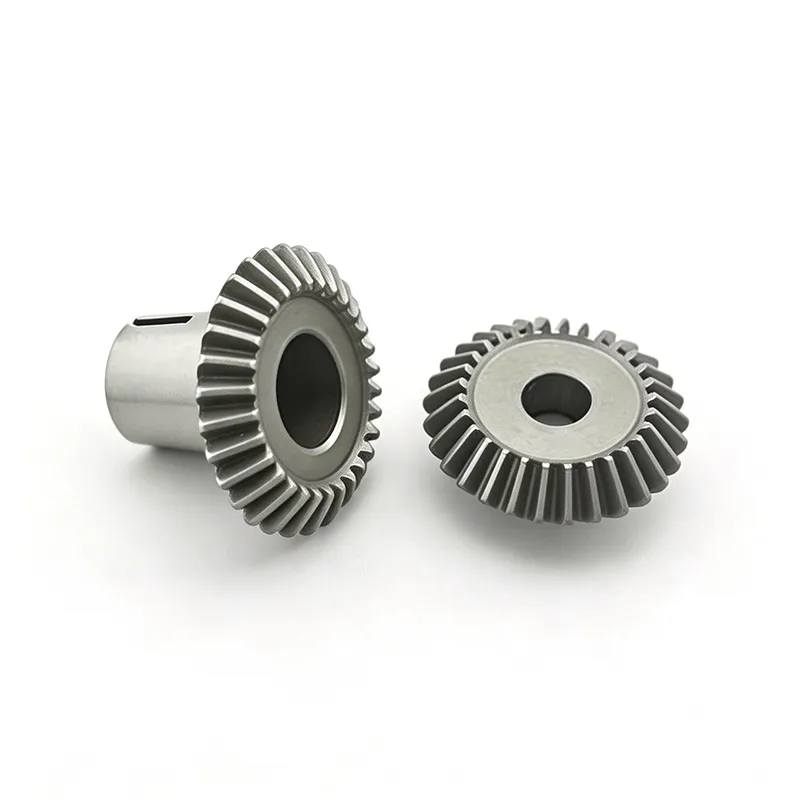
A straight bevel gear is a traditional bevel gear design featuring straight teeth that extend radially along the gear surface. It is designed to transmit power between intersecting shafts, similar to spiral bevel gears.
The main characteristics of straight bevel gears include:
Simple tooth geometry
Easier manufacturing process
Lower production costs
Reliable performance in moderate-speed applications
Straightforward maintenance requirements
Because the teeth engage suddenly across the gear width, straight bevel gears typically produce more impact during operation compared with spiral designs. This limits their suitability for high-speed or noise-sensitive applications.
However, straight bevel gears remain widely used in:
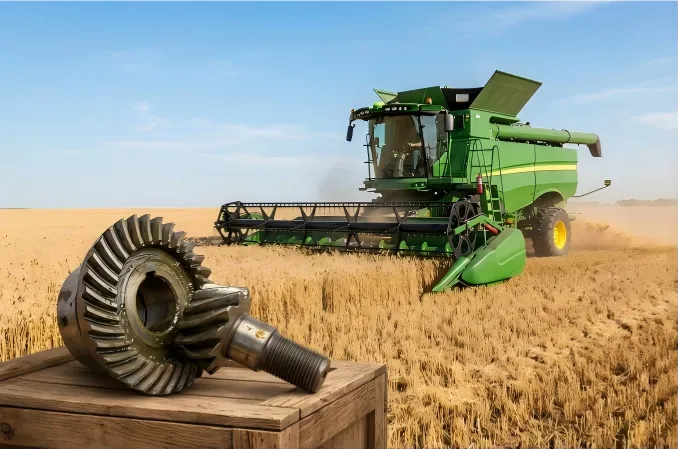
Agricultural machinery
Manual equipment
Low-speed mechanical systems
Simple power transmission devices
Industrial machines with moderate operating requirements
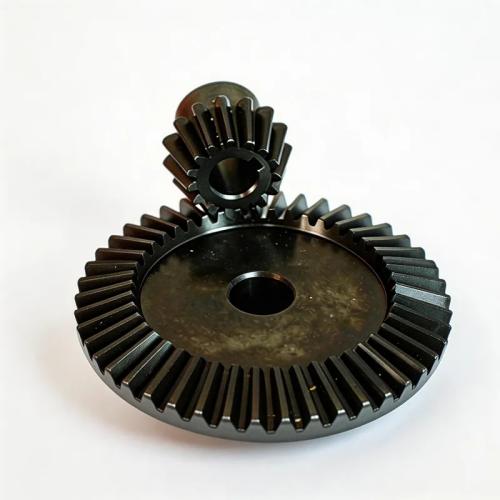
The primary difference between a spiral bevel gear vs straight bevel gear is the tooth design.
A straight bevel gear uses straight teeth that make contact suddenly, while a spiral bevel gear uses curved teeth that gradually enter contact. This difference significantly affects operating smoothness, noise level, load capacity, and service life.
| Feature | Spiral Bevel Gear | Straight Bevel Gear |
|---|---|---|
| Tooth Shape | Curved spiral teeth | Straight radial teeth |
| Tooth Engagement | Gradual engagement | Sudden engagement |
| Operating Noise | Lower | Higher |
| Vibration Level | Reduced | Higher |
| Speed Capability | High-speed operation | Low to medium speed |
| Load Distribution | Better | Limited |
| Manufacturing Complexity | More complex | Simpler |
| Cost | Higher initial cost | More economical |
| Precision Applications | Excellent | Limited |
The choice between straight and spiral bevel gear designs depends on whether the priority is maximum performance or cost-effective mechanical transmission.
A spiral bevel gear operates more quietly than a straight bevel gear, especially at higher rotational speeds.
The reason is the continuous tooth engagement created by spiral tooth geometry. Instead of multiple teeth contacting suddenly, spiral bevel gears provide progressive contact, reducing:
Gear impact loads
Tooth vibration
Operating noise
Transmission shock
For applications such as robotics, aerospace systems, and precision machinery, noise control and vibration reduction are critical factors. This is why many engineers choose spiral bevel gears for high-performance transmission systems.
A straight bevel gear can perform reliably at lower speeds, but its sudden tooth contact creates higher impact forces as speed increases.
Load capacity is another important factor when evaluating spiral bevel gear vs straight bevel gear performance.
A spiral bevel gear provides:
Greater tooth contact area
More uniform load distribution
Improved resistance to wear
Higher continuous operating capability
Because multiple areas of the tooth surface can share the transmitted load, spiral bevel gears handle demanding operating conditions more effectively.
A straight bevel gear transfers power through direct tooth contact. While it provides reliable performance for many applications, the concentrated contact pattern can create higher stress levels under heavy loads.
For applications involving:
High torque
Continuous operation
High rotational speeds
Precision requirements
a spiral bevel gear design is generally the preferred solution.
Spiral bevel gears are widely used where smooth operation, efficiency, and durability are essential.
Industrial machines often require gears that can operate continuously with minimal vibration. Spiral bevel gears provide stable performance under demanding conditions.
Robotic systems require accurate movement control. The precision of a spiral bevel gear design helps reduce backlash and improve positioning accuracy.
Aerospace transmission systems require lightweight, reliable, and high-performance components. Spiral bevel gears meet these requirements through optimized tooth geometry and strong load capacity.
Many automotive differential systems use spiral bevel gear technology because of its ability to deliver smooth torque transmission.
Working with an experienced spiral bevel gear manufacturer allows engineers to develop customized gear solutions based on specific performance requirements.
Although spiral bevel gears provide advanced performance, straight bevel gears remain valuable in many mechanical systems.
Straight bevel gears are suitable for applications where rotational speed is limited and noise is not a major concern.
The simpler manufacturing process of straight bevel gears makes them a practical choice for projects requiring economical transmission solutions.
Machines with basic power transfer requirements often benefit from the reliability and straightforward design of straight bevel gears.
Typical applications include:
Agricultural equipment
Small machinery
Hand-operated mechanisms
General industrial devices
| Application Requirement | Recommended Gear Type |
|---|---|
| High-speed operation | Spiral bevel gear |
| Low noise requirement | Spiral bevel gear |
| Precision motion control | Spiral bevel gear |
| Heavy continuous-duty operation | Spiral bevel gear |
| Lower manufacturing cost | Straight bevel gear |
| Simple transmission system | Straight bevel gear |
| Low-speed machinery | Straight bevel gear |
| Easy maintenance priority | Straight bevel gear |
| Robotics and automation | Spiral bevel gear |
| Agricultural machinery | Straight bevel gear |
Choosing between straight and spiral bevel gear solutions requires evaluating operating speed, torque load, accuracy requirements, and long-term maintenance expectations.
For high-performance applications, spiral bevel gears usually provide better results because they operate more smoothly, generate less noise, and support higher loads. Straight bevel gears remain suitable for simpler and lower-speed applications.
Spiral bevel gears use curved teeth that engage gradually, reducing tooth impact and vibration. This produces quieter operation compared with straight bevel gears.
In many cases, replacement is possible, but engineers must consider shaft configuration, gear dimensions, mounting conditions, and operating requirements before changing the design.
Key factors include tooth geometry, material selection, manufacturing accuracy, heat treatment, lubrication, and the overall spiral bevel gear design.
A qualified spiral bevel gear manufacturer should provide precision machining capabilities, engineering support, quality inspection processes, and experience producing gears for specific industrial applications.
The comparison of spiral bevel gear vs straight bevel gear shows that each design has unique advantages. Straight bevel gears offer simplicity and cost efficiency, making them suitable for basic mechanical systems. Spiral bevel gears provide superior performance in demanding applications through smoother operation, higher load capacity, reduced vibration, and better high-speed capability.
For industries requiring precision, reliability, and long service life, selecting an experienced spiral bevel gear manufacturer and optimizing the spiral bevel gear design are essential steps toward achieving efficient and durable power transmission.
 English