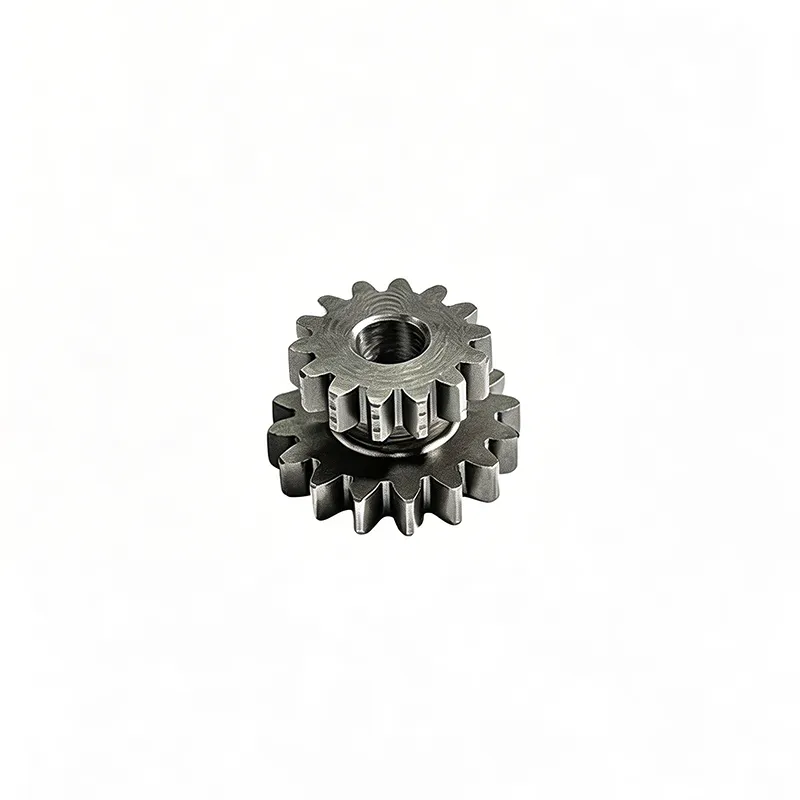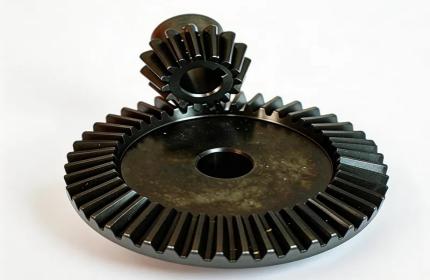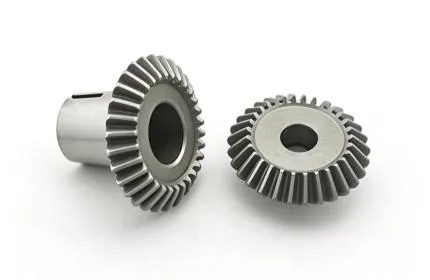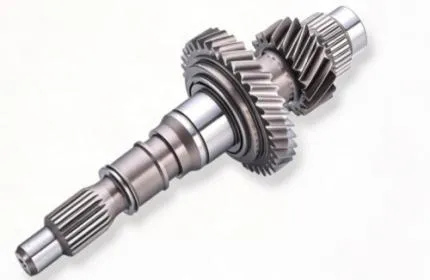
For applications requiring high torque transmission, smooth operation, and long service life, spiral bevel gears often provide advantages over hypoid gears, especially where efficiency, precision, and maintenance costs are critical factors. While both gear types are designed for intersecting or offset shaft power transmission, their differences in tooth geometry, performance, lubrication requirements, and application suitability make them ideal for different industrial needs.
A spiral bevel gear uses curved teeth arranged along a conical surface to achieve smoother engagement, higher load capacity, and quieter operation compared with straight bevel gears. A hypoid gear introduces an offset between the driving and driven shafts, offering greater torque capacity but with higher sliding friction and more demanding lubrication requirements.
Understanding the differences between hypoid and spiral bevel gears helps engineers select the optimal solution for automotive, robotics, aerospace, industrial machinery, and precision motion systems.
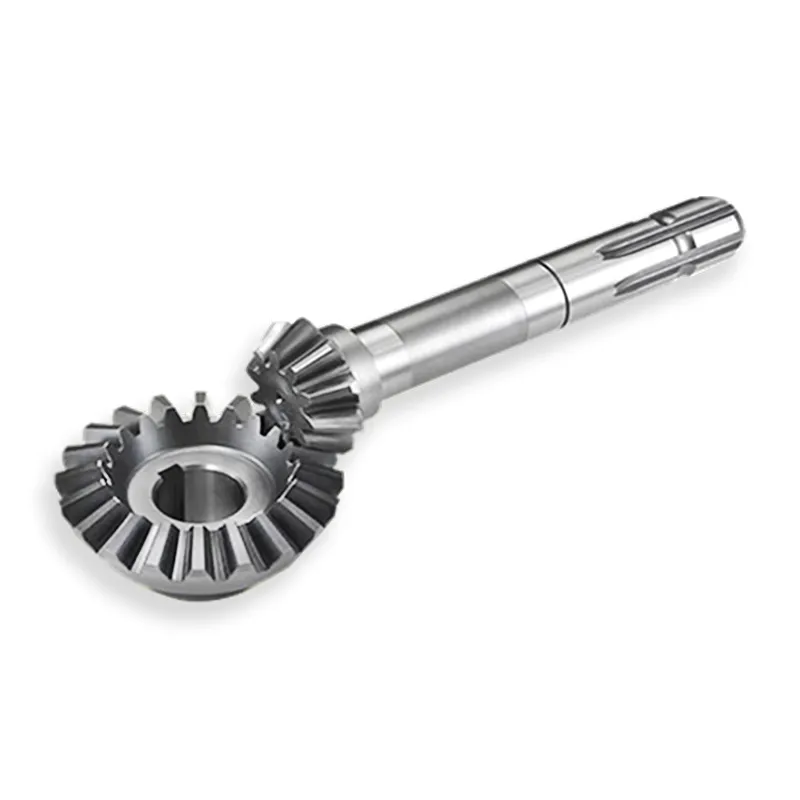
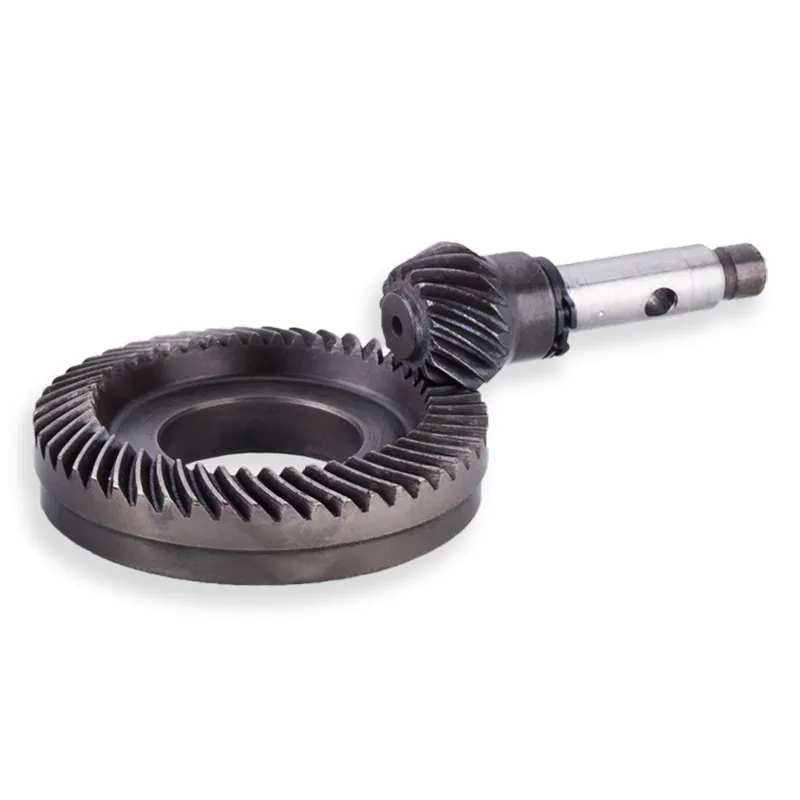
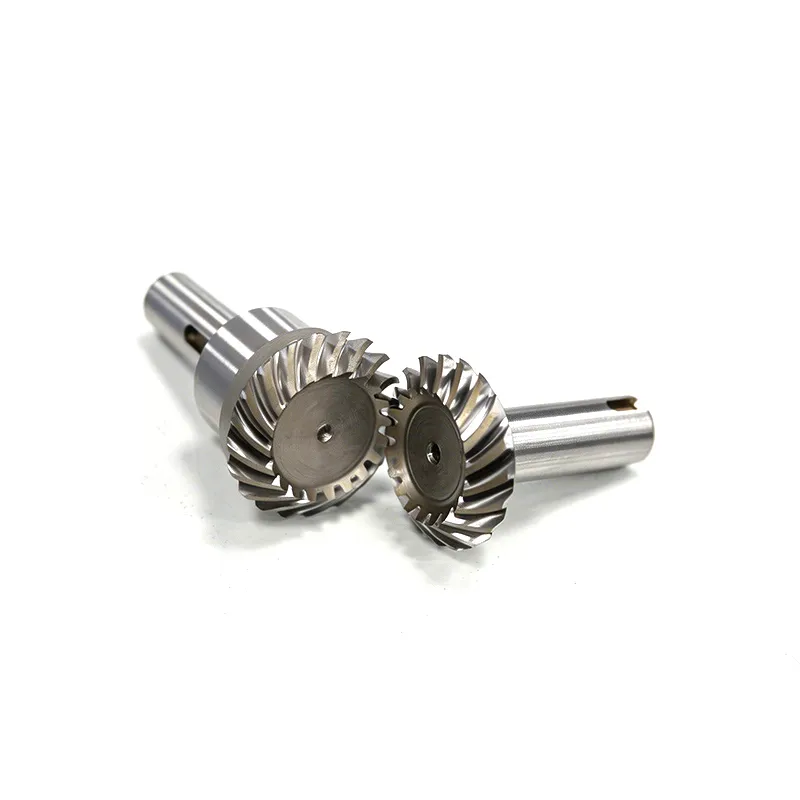
A spiral bevel gear is a type of bevel gear with curved teeth that transmit rotational power between two intersecting shafts, typically positioned at a 90-degree angle. Unlike straight bevel gears, which engage suddenly across the entire tooth width, spiral bevel gears gradually contact each other through curved tooth engagement.
This tooth geometry provides several performance advantages:
Smooth and continuous power transmission
Reduced operating noise and vibration
Higher contact ratio between mating gears
Improved load distribution
Higher operating speeds
Better durability under demanding conditions
The advanced geometry of a spiral bevel gear design allows manufacturers to optimize tooth contact patterns, pressure angles, and surface finishing for specific operating conditions. Modern CNC machining and precision grinding technologies enable a spiral bevel gear manufacturer to produce gears with extremely accurate profiles for applications requiring reliability and efficiency.
Common applications include:
Industrial gearboxes
Robotics and automation systems
Aerospace transmission systems
Machine tools
Marine propulsion systems
Heavy equipment drives
Automotive differential systems
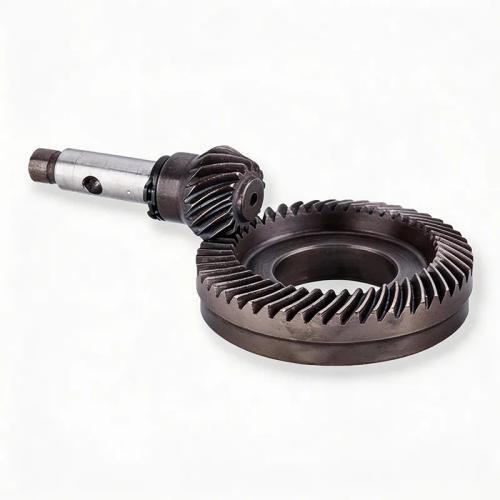
The main difference between hypoid and spiral bevel gears is the shaft arrangement and tooth contact method. A spiral bevel gear transfers power between intersecting shafts, while a hypoid gear operates with offset shafts where the pinion axis does not intersect the gear axis.
Although hypoid gears can provide higher torque density, spiral bevel gears offer several advantages in efficiency, precision, and operational reliability.
| Feature | Spiral Bevel Gear | Hypoid Gear |
|---|---|---|
| Shaft Arrangement | Intersecting shafts | Offset shafts |
| Tooth Shape | Curved spiral teeth | Curved teeth with offset geometry |
| Efficiency | Higher efficiency | Lower due to increased sliding friction |
| Heat Generation | Lower | Higher |
| Lubrication Requirements | Standard gear oils often sufficient | Requires specialized extreme-pressure lubricants |
| Noise Level | Very low | Low but depends on design |
| Torque Capacity | High | Very high |
| Manufacturing Complexity | Advanced precision machining required | More complex production process |
| Maintenance Requirements | Lower | Higher |
A spiral bevel gear is often preferred when efficiency, precision, and long-term operating stability are priorities.
Hypoid gears generate more sliding contact because of their offset tooth engagement. This sliding action increases friction and energy loss.
In contrast, spiral bevel gears provide more rolling contact between teeth, reducing friction and improving power transmission efficiency. This makes them suitable for systems where energy consumption and heat management are important.
Because hypoid gears experience greater sliding forces, they require specialized lubricants containing extreme-pressure additives to prevent tooth surface damage.
Spiral bevel gears typically operate with fewer lubrication challenges, reducing maintenance complexity and operating costs.
The carefully engineered tooth profile of a spiral bevel gear design enables gradual tooth engagement, minimizing impact loads and vibration.
This makes spiral bevel gears particularly suitable for:
Precision machinery
Servo systems
CNC equipment
Robotics applications
where positioning accuracy and stable motion are essential.
Reduced sliding friction allows spiral bevel gears to generate less heat during operation. This improves reliability in continuous-duty applications where gear temperatures must remain controlled.
Although hypoid gears can handle high torque loads, spiral bevel gears often provide longer service life in applications where smooth operation, accurate positioning, and efficiency are more important than maximum torque density.
Hypoid gears can generally achieve higher torque capacity because their offset design allows a larger pinion diameter and greater tooth contact area.
However, strength is not the only factor when selecting a gear system. A spiral bevel gear can outperform a hypoid gear in applications requiring:
Higher efficiency
Lower heat generation
Faster rotational speeds
Better accuracy
Reduced maintenance
For heavy-duty applications such as automotive differentials, hypoid gears remain a common choice. For industrial precision systems, many engineers prefer spiral bevel gears because of their balanced performance characteristics.
Spiral bevel gears are widely used in precision industries because their tooth geometry provides stable and predictable motion transfer.
A high-quality spiral bevel gear design focuses on:
Accurate tooth contact patterns
Optimized spiral angles
Controlled backlash
High surface hardness
Precision manufacturing tolerances
These characteristics help minimize vibration, improve positioning accuracy, and maintain consistent performance over long operating periods.
Industries such as aerospace, robotics, and automation rely on precision spiral bevel gear systems because even small transmission errors can affect overall equipment performance.
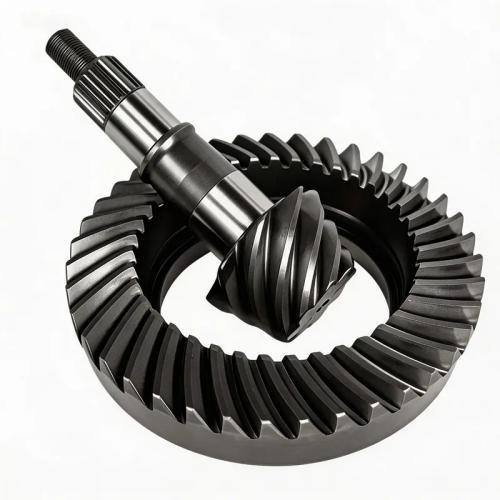
The correct choice depends on the application requirements, including:
High transmission efficiency
Smooth and quiet operation
Precision motion control
Lower maintenance requirements
High-speed operation
Reliable long-term performance
Maximum torque capacity
Shaft offset configuration
Compact drivetrain packaging
High load automotive applications
For industrial equipment where efficiency and accuracy are key priorities, working with an experienced spiral bevel gear manufacturer ensures the gear geometry, materials, and manufacturing process are optimized for the specific operating environment.
The production of spiral bevel gears requires advanced machining technology and strict quality control.
A professional spiral bevel gear manufacturer typically uses processes including:
Gear blank preparation
Precision CNC cutting
Tooth profile generation
Heat treatment for strength improvement
Gear grinding and finishing
Contact pattern inspection
Dimensional accuracy testing
Modern manufacturing techniques allow engineers to customize gear parameters based on torque requirements, speed, noise limitations, and installation conditions.
Yes. Spiral bevel gears generally provide higher efficiency because they produce less sliding friction compared with hypoid gears. This makes them better suited for applications where energy efficiency and heat reduction are important.
A spiral bevel gear can replace a hypoid gear in some applications, but the replacement depends on shaft configuration, torque requirements, installation space, and performance expectations. Since hypoid gears use offset shafts, direct replacement is not always possible.
Spiral bevel gears are widely used in robotics, aerospace equipment, industrial machinery, automation systems, machine tools, and precision transmission applications.
A reliable spiral bevel gear manufacturer should have advanced CNC machining capabilities, precise inspection equipment, engineering expertise, and experience producing gears for different industrial applications.
A well-developed spiral bevel gear design determines gear efficiency, noise level, load capacity, service life, and operating reliability. Proper tooth geometry optimization ensures better performance under specific working conditions.
Both hypoid and spiral bevel gears play important roles in modern mechanical transmission systems. Hypoid gears are valuable when maximum torque capacity and shaft offset are required, while spiral bevel gears provide significant advantages in efficiency, precision, smooth operation, and long-term reliability.
For industrial applications demanding accurate motion control, lower energy loss, and dependable performance, a properly engineered spiral bevel gear solution is often the preferred choice. Partnering with an experienced spiral bevel gear manufacturer ensures the final gear system meets application-specific requirements through optimized spiral bevel gear design and advanced manufacturing processes.
 English